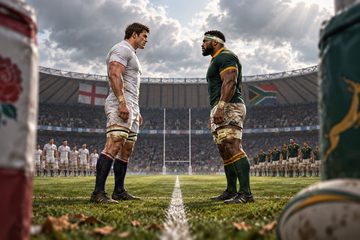
The English national rugby team is poised for success in the upcoming Nations Championship, with a selection dilemma that seems more about strategy than player availability. Under the guidance of coach Steve Borthwick, the team has the potential to dominate, given the right forward pack is chosen to command the game from the get-go.
The key to winning Test matches often starts in the forward pack, and England's current lineup has the capabilities to compete with the best. The inclusion of players such as Ellis Genge, Jamie George, and Joe Heyes in the front row provides a formidable challenge for any opponent, including the likes of South Africa. The second row isn't short of talent either, with George Martin and Ollie Chessum bringing both power and strategic acumen to the field.
Furthermore, the back row composed of Courtney Lawes, Tom Curry, and Ben Earl combines seasoned experience with dynamic athleticism, presenting a balanced and threatening force. Lawes' return to the squad after a hiatus adds a layer of veteran leadership and expertise, particularly in lineout scenarios and tactical play on the ball.
The tactical approach adopted by Borthwick is crucial; understanding that the fast, expansive style of play seen in Premiership Rugby is only effective when the initial collisions are won. This sets a foundation for playing expansively in the latter stages of the game, a method that has proven successful in domestic competitions.
England's bench strength, with players like Will Stuart, Luke Cowan-Dickie, and Maro Itoje ready to step in, ensures that the team can maintain intensity and tactical sharpness throughout the full 80 minutes. The squad's depth allows for strategic substitutions that can alter the course of the game in England's favor during critical phases.
While the forward pack is central to England's game plan, the backline also stands to benefit significantly. With players such as Alex Mitchell and Fin Smith orchestrating plays, the backs are well-positioned to exploit the spaces created by a dominant forward performance. The selection of experienced players like Henry Slade alongside promising talents such as Max Ojomoh in the centers could provide the perfect blend of creativity and reliability needed for high-stakes matches.
Moreover, the fitness and selection concerns around players like Benhard Janse van Rensburg highlight the challenges Borthwick faces in finalizing his squad. The upcoming games will not only be a test of physical prowess but also of strategic depth and adaptability in face of uncertainties.
As the Nations Championship looms, England's rugby team appears well-equipped and strategically prepared to contend at the highest level. The focus on winning up front, supported by a capable and versatile bench, sets the stage for what could be a compelling campaign. With a blend of hardened experience and youthful vigor, England's squad selection reflects a balanced approach to modern rugby warfare, ready to face Australia, Japan, and New Zealand on home turf this November.