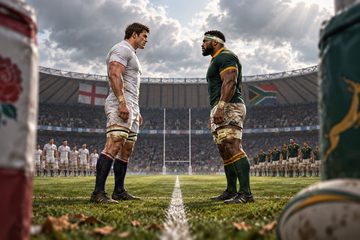
Sir Graham Henry, a legendary figure in rugby history, has expressed his admiration for Rassie Erasmus, who orchestrates the Springboks with a fearless approach that has transformed them into a formidable force. Having observed the Springboks firsthand during Rugby’s Greatest Rivalry series, the former All Blacks coach, now a selector for Dave Rennie, offers insights into Erasmus' strategic boldness.
The recent series saw South Africa initially stumble with a loss at Ellis Park, only to rally and claim victory in the subsequent three matches. However, their triumph was short-lived, as they faced a setback against the Wallabies in Perth, succumbing to a 42-38 defeat. This loss came on the back of Erasmus making significant changes to his lineup, introducing ten new players including Andre Esterhuizen as captain.
Henry praises Erasmus for his readiness to risk outcomes for long-term goals. He emphasizes Erasmus' commitment to squad depth, allowing players to gain crucial international experience. This philosophy resonated with Henry, who explained:
“Oh, for sure. I think he’s got it well sorted. He has got rotation; we used to have rotation, so he’s got a lot of depth. He’s prepared to play players and give them confidence; that’s very important.”
Such an approach ensures that everyone involved feels valued and motivated, even if it means facing an occasional loss, as seen against the Wallabies. Erasmus' emphasis on player rotation underscores his willingness to lose a battle to win the war, thereby grooming future rugby superstars.
Henry elaborates on the nuances of Erasmus' strategy:
“Well, he’s prepared to take risks through his selection. I think the Wallabies played very well in that Test match and they won the aerial battle, and they played tactically very well.”
Beyond strategy, Henry speaks of the Springboks with reverence, acknowledging their pivotal role in a nation rife with challenges. Their cohesion and motivation make them a beacon of hope in South Africa, bolstering a diverse group into world-class champions. Henry admired their unity, drawing parallels to the formidable All Blacks teams he once led.
Interestingly, while South Africa's set-piece prowess was crucial against the All Blacks, Henry noted that New Zealand's approach won't mirror the Springboks'. Improvements in scrummaging and lineouts are necessary, yet the All Blacks will remain true to their distinctive style:
“Well, we won’t play that sort of style of rugby because that’s not our DNA; we will play what you’ve been seeing in the Wallabies’ Test in the Bledisloe Cup and try to perfect that.”
In summary, Henry likens the current Springboks to a previous era of All Blacks, highlighting the significance of shared experiences and mutual support within the team. He underscores their role as national icons, drawing parallels to the camaraderie that fueled New Zealand's own World Cup triumphs.
As Erasmus continues to lead the Springboks with bold decisions and unwavering confidence, his approach not only enhances their depth but also solidifies their status as a rugby powerhouse.