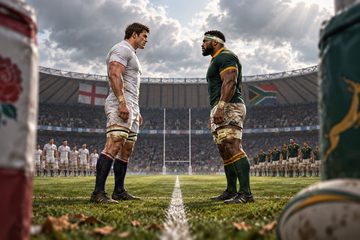
New Zealand's head coach Dave Rennie delivered a succinct observation following his team's second commanding victory over Australia in as many weeks. His comments highlighted the Wallabies' imitation of the All Blacks' style—though markedly less effectively—a sore point as Australia navigates its rugby identity under new head coach Les Kiss. "There's no point playing this way and then going to a World Cup and trying to play risk-free footy," remarked Rennie. "If you look at the Wallabies, they’re pretty similar to us. They’ll want to play, and it’s a point of difference, part of the DNA of both sides."
The Wallabies recently faced a tough challenge in their Bledisloe Cup encounters against New Zealand, losing 43-21 at Accor Stadium in Sydney. Over the series, they were outscored with a total of 14 tries and 93 points across both matches, signaling a significant gap in performance and strategy between the two teams.
Rennie’s point underscores a larger issue: how can Australia step out of New Zealand's shadow if their style mirrors the All Blacks but lacks the same polish and conviction? This recent performance ignites questions about the Wallabies' current approach and whether it can ever be enough to outclass their formidable rivals.
The essence of the problem may be distilled into a classic sports adage by American football coach Paul 'Bear' Bryant: "Offense wins games, but defence wins championships." Despite the modern rugby era favoring high-scoring, aggressive play, the foundational strength of a team often rests on its defensive capabilities. Under Kiss’ leadership, initially known for his defensive acumen, there seems to be a crucial disconnect.
When Kiss took over, he aimed to fortify the Wallabies' defensive strategies. "We want to make sure we make [defence] a weapon for us, so we can attack with it," he had stated. However, the implementation appears lackluster. More alarmingly, defensive patterns from previous coaching regimes seem to persist, with little adaptation or improvement evidenced in recent outings against the All Blacks.
The traditional 12/1/2 defensive alignment, still employed by the Wallabies, proved insufficient against New Zealand’s dynamic attack. This system, characterized by 12 men in line, two in the backfield, and a scrum-half roaming the intermediate space, has left too much territory open for the All Blacks to exploit. Notably, the system showed weaknesses as Australia conceded 24 clean breaks and won only four turnovers in their latest matches.
The Wallabies need a tactical shift, particularly in their defensive approach if they are to renew their competitiveness on the international stage. As the high scores become more common in modern rugby, coaches and players must adapt swiftly and effectively to balance offensive flair with strategic, robust defence.
With the World Cup on the horizon, the Wallabies' current trajectory suggests a tough competition ahead unless substantial improvements are made. Advocates and critics alike will be watching closely to see if Kiss can revitalize a team that's currently struggling to find its footing in the evolving landscape of international rugby.