Brett Gosper, the World Rugby chief executive, has demanded referees show more red and yellow cards to try to put an end to the dangerous tackles that are blighting the game.
The number of reported concussions has risen in each of the last seven years, according to the latest RFU data, with concussion accounting for 22 percent of all match injuries in the 2016/2017 season.
This year four top players have been forced to retire as a result of concussion: Ireland back Jared Payne, Dragons' centre Adam Hughes, La Rochelle lock Jason Eaton and Leicester Tigers' back-row Dominic Ryan.
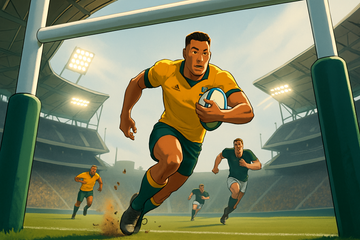
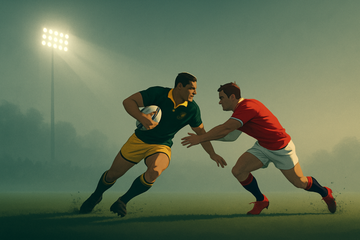
The autumn internationals have been overshadowed by a series of controversial challenges by high-profile players including England co-captain Owen Farrell, South Africa skipper Siya Kolisi, Australia's Samu Kerevi and New Zealand's Sam Whitelock. None were punished with a card.
Brett Gosper, the World Rugby chief executive, has demanded referees show more red and yellow cards to try to put an end to the dangerous tackles that are blighting the game.
The number of reported concussions has risen in each of the last seven years, according to the latest RFU data, with concussion accounting for 22 percent of all match injuries in the 2016/2017 season.
This year four top players have been forced to retire as a result of concussion: Ireland back Jared Payne, Dragons' centre Adam Hughes, La Rochelle lock Jason Eaton and Leicester Tigers' back-row Dominic Ryan.
The autumn internationals have been overshadowed by a series of controversial challenges by high-profile players including England co-captain Owen Farrell, South Africa skipper Siya Kolisi, Australia's Samu Kerevi and New Zealand's Sam Whitelock. None were punished with a card.
With World Rugby having prioritised reducing the number of head injuries - recent research showing that high tackles are four times as likely to lead to a head injury assessment as one made below the shoulders - the failure by referees to take action was widely questioned.
Now Gosper has added his voice to the debate, insisting that not enough has been done to persuade players to lower the height of the tackle since the law was changed earlier this year and calling for referees to take tougher action on the field.
"The cards are there to change behaviour," he explained. "They only continue to be a problem if behaviour does not change. The only way you can get player behaviour to change is to sanction with red cards and actually, we have probably not seen enough of it.
"I would say in many ways we have probably not been hard enough. There have probably not been as many yellow cards as we would like, and maybe not even as many red cards as we would like. We have not had the behaviour change that we are seeking yet, so we have to continue in that vein.
"The whole tackle law is to protect the ball carrier and the tackler, in fact mostly the tackler, given that two thirds of concussions occur to that player rather than the one carrying the ball.
"Dropping the height of the tackle is due to the statistics showing us that if the player is bent at the waist as they tackle, they are four times less likely to suffer a concussion. Of course when you drop the height of the tackle, you are also less likely to concuss the ball carrier."
Brett Gosper, the World Rugby chief executive, has demanded referees show more red and yellow cards to try to put an end to the dangerous tackles that are blighting the game.
The number of reported concussions has risen in each of the last seven years, according to the latest RFU data, with concussion accounting for 22 percent of all match injuries in the 2016/2017 season.
This year four top players have been forced to retire as a result of concussion: Ireland back Jared Payne, Dragons' centre Adam Hughes, La Rochelle lock Jason Eaton and Leicester Tigers' back-row Dominic Ryan.
The autumn internationals have been overshadowed by a series of controversial challenges by high-profile players including England co-captain Owen Farrell, South Africa skipper Siya Kolisi, Australia's Samu Kerevi and New Zealand's Sam Whitelock. None were punished with a card.
With World Rugby having prioritised reducing the number of head injuries - recent research showing that high tackles are four times as likely to lead to a head injury assessment as one made below the shoulders - the failure by referees to take action was widely questioned.
Now Gosper has added his voice to the debate, insisting that not enough has been done to persuade players to lower the height of the tackle since the law was changed earlier this year and calling for referees to take tougher action on the field.
"The cards are there to change behaviour," he explained. "They only continue to be a problem if behaviour does not change. The only way you can get player behaviour to change is to sanction with red cards and actually, we have probably not seen enough of it.
"I would say in many ways we have probably not been hard enough. There have probably not been as many yellow cards as we would like, and maybe not even as many red cards as we would like. We have not had the behaviour change that we are seeking yet, so we have to continue in that vein.
"The whole tackle law is to protect the ball carrier and the tackler, in fact mostly the tackler, given that two thirds of concussions occur to that player rather than the one carrying the ball.
"Dropping the height of the tackle is due to the statistics showing us that if the player is bent at the waist as they tackle, they are four times less likely to suffer a concussion. Of course when you drop the height of the tackle, you are also less likely to concuss the ball carrier."
Gosper added that World Rugby were fully aware the new directives had not led to perfect results, given the confusion over some major incidents this month such as Farrell's tackle on Andre Esterhuizen in England's victory over South Africa.
Farrell's injury-time challenge - which saw him hit Esterhuizen with his shoulder, with only a belated attempt to use his left arm - was analysed by referee Angus Gardner with the help of the TMO but he decided to take no action, ensuring England won 12-11.
Since then, Kerevi's late, high challenge on Leigh Halfpenny saw the Wales full-back suffer concussion which has ruled him out of this weekend's game against South Africa. At the time, Wales attack coach Neil Jenkins branded the decision "unbelievable".
Kolisi, meanwhile, was not even cited despite aiming an apparent headbutt at Scotland's Peter Horne, while Whitelock was criticised by pundits including Brian O'Driscoll for hitting Cian Healy in a ruck during the All Blacks' defeat in Dublin last Saturday.
"We recognise that there are consistencies, and over time that will sort itself out. We are working to rectify them. We cannot stand there with our hands up and say we get it right every time," Gosper admitted.
"Our job is to keep insisting on the objectives that we have for player welfare reasons. After the first weekend of November we had meetings with the referees and coaches to remind them what we are looking for in this area to get that consistency everyone wants to see."
Gosper ruled out the possibility of an extra 'orange' card being introduced for high tackle offences to avoid teams being reduced to 14 men automatically, and sympathised with the task facing officials.
"It is not an easy job being a referee and they are under a lot of pressure," he added. "We give them our full support. Our job is to make them feel comfortable with what we want them to do with the tackle area."
Gosper, speaking at the launch of the logo for the France 2023 Rugby World Cup, also provided a positive update on Japan's preparations for next year's tournament, suggesting it was "more advanced" than the England 2015 campaign at the same stage four years ago.
"Obviously we have had our moments, as you do with every World Cup at times. We are now in very good shape in Japan and have had some unexpected upsides - we were forecast a bit of a dip in our commercial revenues given we are outside of our normal time zones and with sponsors maybe not going to the destinations they usually go to. But now we are thinking the revenues will even overtake those of England 2015 at this point."
In addition World Rugby confirmed last week that Fiji and Samoa will each receive a representative seat on the governing body's council moving forward.
The news follows a successful social media campaign run by Pacific Rugby Welfare, #SeatAtTheTable, with the organisation now hoping the Pacific Island sides will now have a greater input regarding the global Test calendar moving forward.
"[Fiji and Samoa] now have a voice and will therefore be heard," noted Gosper. "In the next calendar that we are talking about there will be a 33 percent increase in Tier 1 and Tier 2 games, which is good. And that has come from the right kind of pressure from those nations."
by NZHerald
Instead of promoting Pansyball, why don't they demand higher standards of reffing? There's no such thing as a safe collision. If you want safety, start a new sport, where everyone sits in a circle blowing bubbles at each other whilst wearing crash helmets.