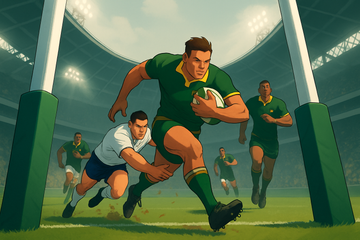
When Ben Earl took to the field as England's number eight, it rekindled the perennial debate about players being "out of position." This critique, however, is arguably the most overused and least insightful in rugby punditry. It overlooks the nuanced strategy of skill-based selection, which transcends mere jersey numbers—a concept top coaches have embraced for years.
The outcry surfaces every time Steve Borthwick announces his lineup, with critics quick to claim misplacement of players. Yet, this past weekend's match demonstrated the flaw in such superficial analysis. Ben Earl, often debated whether better as a seven or eight, showcased why his selection at eight is strategic rather than erroneous. His performance, alongside others in supposedly unconventional roles, underscores a broader tactical approach that prioritizes skill synergy over traditional positioning.
"The best coaches stopped thinking in jersey numbers years ago."
Indeed, the focus on jersey numbers is an outdated mode of thinking. Modern rugby is less about individual positions and more about how a player's abilities complement the team's overall game plan. For instance, Scotland's decision to start Jamie Dobie, typically a scrum-half, on the wing was initially criticized. However, his contribution to Scotland's dynamic play and their highest points tally on Argentine soil justified Gregor Townsend's unconventional choice.
Rugby selection is akin to solving a portfolio problem, where the aim is to assemble the best blend of skills across the 15 starting players to execute a specific strategy against a particular opponent. This often means placing a great player in his second-best position if it strengthens the team's overall dynamics.
Ben Earl exemplifies this approach. His agility and ability to cover multiple roles on the field make him a valuable asset, regardless of whether he's playing at eight or seven. His selection is less about filling a position and more about fulfilling a role within the strategic framework devised by the coaching staff.
"It's not about the jersey; it's about the player's impact in the game context."
Tommy Freeman's deployment at outside centre serves as another example. Questioning if he is a "true 13" misses the point. What matters is his ability to influence the game from that position, which he does effectively by exploiting defensive gaps.
The real issue at Ellis Park wasn't about lacking a traditional full-back; it was about the absence of a specialized aerial player in the back three. This oversight in selection highlights the importance of having the right skill sets to match the game's demands, irrespective of the numbers on the back of the jerseys.
France has long moved past this archaic debate, focusing instead on player roles defined by the game's requirements rather than by rigid positional labels. Their strategy of assigning players based on the scrum's left or right side, rather than the conventional open or blindside, has proven successful and is a testament to the efficacy of skill-based rugby.
The outdated criticism of players being "out of position" not only fails to offer genuine insight but also ignores the evolving nature of rugby strategy. As the sport continues to advance, so too must the perspectives from which we analyze it.