Nigel Owens, a former Test referee with a reputation for sharp observations, is voicing concerns about the over-reliance on technology in rugby, suggesting it's hindering the sport rather than helping it flow.
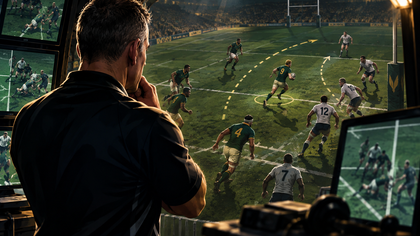
The Welsh rugby icon argues that the role of the Television Match Official (TMO) has ballooned to such an extent that on-field referees are becoming deferential, allowing crucial decision-making to slip away from them. "It's easier to referee in one sense because any big decision now the TMO makes the call. You never see referees give red cards anymore, they are few and far between," Owens shared on the Irish Rugby Pod.
“It’s now yellow card threshold, sent to the bunker and then a man or woman sitting there makes the decision. The referees don’t make those big decisions anymore so the game is easier to referee in one sense because any big call now, you just go to the TMO and everybody has a say and everybody has a look at it, and then you can make your mind up.”
While acknowledging the benefits of technology in resolving contentious decisions that are difficult to catch with the human eye, Owens expressed his belief that the game has become overly technical. He questioned the need for endless slow-motion replays to determine outcomes, suggesting that it detracts from rugby’s essence.
He urges World Rugby to rethink the extent of TMO's involvement. Owens acknowledges the tool’s necessity in certain situations, particularly during try-scoring decisions, but argues against its use for more mundane decisions like forward passes or knock-ons far from the try line.
“For me, they need to look at the technology. Yes, it has its place in the game, don’t get me wrong, there are some decisions that are humanly impossible to see,” he stated. “You need technology to make those big calls when in the act of scoring, but you shouldn’t be using the TMO to tell you something’s a forward pass or knock-on back on the halfway line.”
Owens also questions why top-tier referees appear to be giving up their on-field authority to officials in the TMO box, who often lack international experience. The reliance on TMO, according to him, upends the traditional hierarchy of decision-making in rugby.
“I think the most important guy on the field now is the TMO, he’s the one who makes the big decisions. Anything that is a big decision, it pretty much goes up on the screen,” he explains. “We’ve got some quality referees out there and I would like to see them making the decisions themselves on the field and not leaving it for the TMO.”
The crux of Owens’ argument is that the essence of rugby is being diluted by a bureaucratic and overly cautious approach, where referees are chosen for their expertise yet seem to lean heavily on less experienced counterparts in technology-oriented roles. He advocates for a return to a more referee-focused decision-making process on the field.
Rugby enthusiasts and officials alike are now left to ponder whether this new age of technology is enhancing the sport or merely complicating it further. As Owens calls for a reevaluation, one thing is certain: the debate on TMO's role in rugby is far from over.