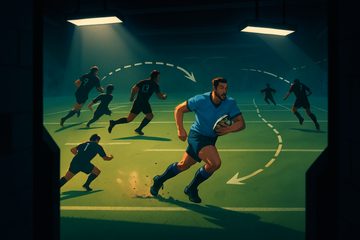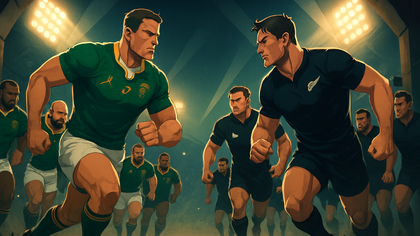
When rugby transitioned to professionalism on August 26, 1995, a century after rugby league had done so, it ushered in an era of evolving strategies and rules that echo to this day. While league simplified play by removing lineouts and making scrums symbolic, union continues to grapple with whether to allow more or less contest for the ball post-tackle, affecting the dynamics of ancient rivalries such as that between the Springboks and All Blacks.
The debate over 'contest' or 'no contest' at rucks and scrums simmers perpetually in the rugby universe, influencing tactics and game flow. This struggle is evident in the Nations Championship, where rapid play and minimal set-pieces dominate, challenging historical expectations of international rugby.
"The scrum feed, we are still trying to get that to be fed straight and everybody hooks and so on. It was a great way of communicating, I think, the way World Rugby handled it. They were always fair in every single department."
Rassie Erasmus has vocally pushed for more scrum and maul contests, reflecting a desire for a grittier, more physical contest at the set-piece, aiming to reduce ball-in-play time and increase penalties for technical errors in the forwards.
The strategic divergence is stark when comparing the play styles of New Zealand and South Africa. Under coaches Dave Rennie and Sir Graham Henry, the All Blacks are pushing boundaries at rucks, aiming to keep the ball in play and minimize contests, effectively starving opponents like the Springboks of possession.
"[Springbok scrum coach] Daan [Human] must be listening to me; he just ‘WhatsApped’ me, saying that the directive is in the scrum [laws]: your left shoulder must be in the centre of the scrum when feeding it."
Meanwhile, the Springboks, under Erasmus's guidance, continue to innovate, as seen with the 'midfield maul' tactic debuted last year against Italy. This strategy aimed to challenge the prevailing lineout drive defenses and showcase a different form of mauling, away from traditional areas.
Changes in World Rugby directives are shifting tactics at the maul, prompting adaptations in defensive and offensive strategies at these set-pieces. The emphasis is on adding numbers and maintaining the integrity of the maul, thus altering game outcomes by forcing players into more physically taxing roles.
The ongoing rivalry between Ireland and New Zealand also highlights the contest at the breakdown, a critical area where the game's philosophy is visibly contested. Despite Ireland's efforts at the breakdown, New Zealand's proficiency in maintaining possession under the watch of referee Nic Berry underscores the tactical nuances that currently favor less contestation in this facet of the game.
As rugby continues to evolve, the strategic interplay between traditional rugby powerhouses like the All Blacks and Springboks will likely hinge on how each adapts to the shifting sands of rugby law and on-field tactics. These adaptations will dictate not only the outcomes of their matches but potentially the future trajectory of international rugby.