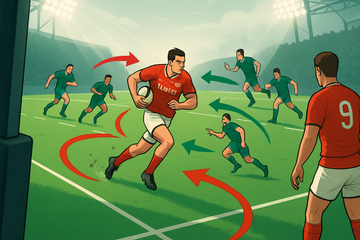
Springboks' head coach Rassie Erasmus has delineated a clear philosophy when it comes to player selection, dividing potential candidates into two distinct types. With an abundance of talent available from both domestic franchises and overseas, decision-making could seem a daunting task. Yet, Erasmus' criteria simplify the process. This approach was evident as the Springboks prepared for their robust Nations Championship campaign, showcasing their depth with convincing wins by both the SA ‘A’ team and the main squad against formidable opponents.
Erasmus, now in his second stint as head coach, is steering a ship rich in talent and ambition. Players like Damian de Allende and Pieter-Steph du Toit are on the brink of personal milestones, yet the focus remains firmly on the team's collective success. The depth of the squad is not just a testament to the current crop but also to the promising talents rising through the ranks, as demonstrated by the Junior Boks' early successes in the World Rugby Junior World Championship.
"One of the things we definitely discussed without talking, out of our team environment, is that for a player chasing Test caps, unfortunately there’s not a place for him in our environment, and that we decided together,"
Erasmus explained his selection philosophy further, emphasizing the importance of team-oriented players over individual glory seekers. "The plain and simple reason is you get two types of Springboks: those who will do anything to be in the team and then those who will do anything to make the team win. We prefer the latter.” This mindset fosters a culture where the collective objective trumps personal achievements, aligning with the broader goals of the team.
The selection dilemma often arises when two players are closely matched in skill and form, prompting rotations to maintain competitive edge and player sharpness. "If two players are really close to each other, we like to rotate. When two players are really close to each other, we like to put the best guys on the bench because they are so close to the team. But if two players are really far apart from one another, we try to bring youngsters into the system or guys that we think can fill those guys’ boots, and they must wait a little bit until they’re good enough to get the opportunity,” Erasmus noted.
The balancing act of managing a high-caliber team while preparing to face tough international opponents like England encapsulates the challenges and strategic nuances of modern rugby coaching. Erasmus' clear vision and strategic acumen continue to shape a formidable and cohesive Springboks unit poised for success on the global stage.